
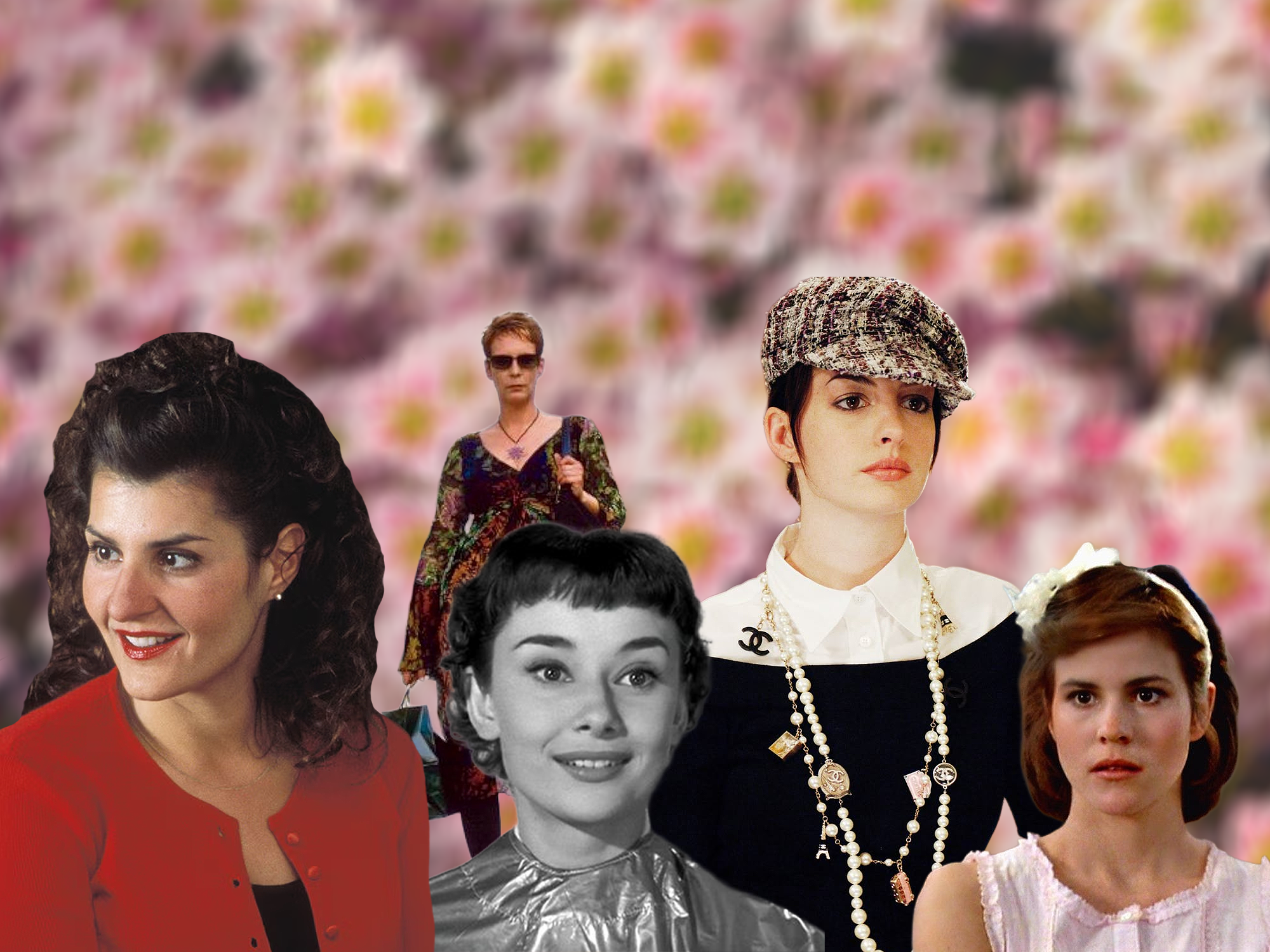
Unfortunately, the more impressionable the girl, the more the world infringes on her malleable sense of self. “You look a lot better without all the black shit on your eyes.” Self-styled princess Claire (Molly Ringwald) asserts, dragging an eyeliner pencil across Ally’s (Allison Reynolds) lower lashes. “Hey, I like that black shit,” she retorts. The Breakfast Club embodies the more frustrating facets of the makeover, which can reduce people to mere puppets of gender. When Ally steps out of the bathrooms, the outline of her cooler, grungier self is barely discernible beneath the layers of powder and frills. Toula’s (Nia Vardalos) similar transformation in My Big Fat Greek Wedding doesn’t leave the same bitter taste in viewers’ mouths. Her decision to replace her shapeless jumpers with brightly coloured cardigans is spread over weeks, and the cosmetic retooling is paired with a newfound social confidence. Between tweezing and brushing we catch sight of Toula approaching strangers on her lunch break, eagerly raising her hand to answer questions in class – slowly unfurling from her protective crouch. Her newly made-over self is a more honest container for her outgoing self.
When Toula finally goes on her first date with Ian (John Corbett) she has to account for this radical change: “I was kind of going through a phase…up ‘til now…” Toula haltingly explains, “And, uh…I was frump girl.” Ian tilts his head encouragingly. “I don’t remember frump girl, but I remember you,” he flirts. It’s a necessary exchange, earnest and sweet and upholding the radical potential of self-fashioning. This carefully constructed recognition is mirrored by Roman Holiday’s Joe and Anne and their post-haircut encounter: “Well, it’s you! Or is it?” He teases. It’s an innocuous exchange that covertly affirms Anne’s fundamental shift from damsel in distress to independent woman. Toula and Anne journey along vastly different routes to the same self-determinant place; they construct bridges between how they feel internally and how they want to appear outwardly. Such a hopeful framing contrasts with Ally’s makeover, which sees her succumbing to the world – reconstructing herself according to someone else’s blueprint.
Making yourself over can also engender empathy. In Mark Waters’ 2003 update of Freaky Friday, rebellious teen Anna (Lindsay Lohan), now inhabiting the body of her type‑A mother Tess (Jamie Lee Curtis), utilises the advantages of grown-up finances to remodel her Mum. In one afternoon – condensed to a single minute in the film – gone are the grey suits and sensible shoes, replaced with a form-fitting Diane von Furstenberg dress, stiletto boots, and an edgy pixie cut. “My hair! It’s gone!” Tess wails upon seeing her newly adorned body. “Mom, it’s cool,” Anna protests. This makeover is what the film hinges on, forcing mother and daughter to take a walk in each other’s shoes and come to a place of understanding in order to switch their bodies back.
Just as Nigel has to explain that Runway magazine’s importance extends beyond its physical pages, standing as “a shining beacon of hope” for outcast artists everywhere, the makeover montage collects all the discarded girlish daydreams of making yourself anew, and gives them a tangible form. When I think of the makeover montage, I do think of brushed hair, shiny French manicures, brash prints and vibrant colours – but I also think of the younger versions of myself, unsure of her style and desperate to enter these magical makeover portals, who would watch these films. While intent and execution can massively alter the meaning of a movie makeover montage, at their best, these scenes are an affirmation that it’s okay to care about how you present yourself externally to the world – and to change it based on who you want to be on any given day.